When safeguarding expansive properties, discerning landowners often seek cost-effective fencing solutions that balance security, durability, and budgetary constraints. This article delves into a comprehensive guide for large property fencing, tailored to meet diverse needs with a focus on sustainability and value. From evaluating your specific fencing requirements to exploring the longevity of wood and composite materials, the strengths of chain link options, and the practicality of high-tensile wire systems for open land management, readers will glean insights into each solution’s unique benefits. Furthermore, we provide a detailed cost analysis and maintenance planning framework to ensure your fencing investment remains both sound and sustainable over time. Join us as we navigate the landscape of efficient and economical fencing solutions tailored for large properties.
- Evaluating Your Large Property Fencing Needs
- Wood Fencing: Durability on a Budget
- Chain Link: Strength and Visibility for Less
- High-Tensile Wire Fencing for Open Land Management
- Composite Materials: Long-Lasting Alternatives to Wood
- Cost Analysis and Maintenance Planning for Sustainable Fencing Investments
Evaluating Your Large Property Fencing Needs
When assessing your large property fencing needs, it’s crucial to consider several factors that will influence the type and design of fencing solution best suited for your land. Begin by mapping out your property to determine the size, terrain, and areas requiring the most privacy or security. This will help in selecting a fence that is not only functional but also complements the landscape. For instance, hilly or uneven terrain may necessitate a flexible fencing system that can adapt to varying ground levels. Additionally, the purpose of the fence—be it for security, privacy, containment of livestock, or aesthetic reasons—will guide your choice between various materials like wood, vinyl, chain-link, or steel.
Cost is another pivotal element in the evaluation process. A thorough budget analysis should include not only the initial installation costs but also long-term maintenance expenses. Some materials may have a higher upfront cost but require less upkeep over time, making them more cost-effective in the long run. Furthermore, local climate conditions can affect material durability and repair frequency, influencing the overall cost-effectiveness of your chosen fencing solution. Conducting a detailed evaluation of these factors will ensure that the fencing solution you implement meets both your security needs and budgetary constraints while standing the test of time and environmental influences.
Wood Fencing: Durability on a Budget
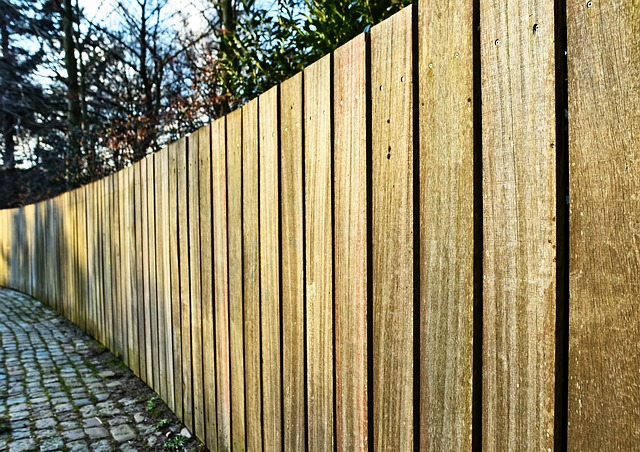
Wood fencing offers a timeless and natural aesthetic that can enhance the curb appeal of large properties while maintaining a budget-friendly approach to durability. As a renewable resource, wood provides a sustainable option for those looking to minimize environmental impact. Its inherent versatility allows for customization in design and style to fit various property types and landscapes. The longevity of wood fencing is often underestimated; with proper maintenance, such as staining or painting every few years and regular inspections for damage, it can withstand the test of time. Different types of wood, including cedar, redwood, and pine, offer varying levels of durability and resistance to rot and insects. For large properties, opting for longer lengths and fewer posts can reduce material costs and labor time during installation. Additionally, the choice of wood fencing over more expensive materials like vinyl or metal can result in significant savings without compromising on the security and privacy that a boundary fence provides. The key to maximizing the cost-effectiveness of wood fencing lies in selecting high-quality materials, employing skilled labor for installation, and committing to regular upkeep to ensure a long-lasting barrier that protects both the property and investment.
Chain Link: Strength and Visibility for Less
Chain link fencing stands out as a highly cost-effective solution for securing large properties, offering both strength and visibility at a fraction of the cost of other materials like wood or vinyl. Its durability is unmatched, with galvanized steel wire strands coated in a durable zinc layer that resists rust and corrosion, ensuring longevity. This robustness makes chain link an ideal choice for properties requiring a high level of security without compromising on the budget. Additionally, the transparent nature of the mesh allows for unobstructed views, which is particularly beneficial for properties with expansive landscapes or where maintaining sightlines is important. The visibility aspect not only enhances the property’s appeal but also blends the fence into its surroundings, making it a practical choice for both residential and commercial applications. Customizable in terms of height and coating options, chain link fencing can be tailored to meet specific security needs and aesthetic preferences, further cementing its position as a versatile and economical option for large-scale fencing requirements.
High-Tensile Wire Fencing for Open Land Management
High-tensile wire fencing represents a cost-effective and durable solution for managing large open lands, particularly for ranchers, farmers, and landowners with expansive properties. This type of fencing consists of a series of vertical strands of wire that are held under tension between end assemblies and fence posts. The tension within the wires ensures the fence maintains its shape and is difficult to break or push over, making it effective against livestock escapes and wildlife intrusions. The versatility of high-tensile fencing allows for various designs, including cross fencing for subdividing pastures and rotational grazing systems, which can enhance the land’s productivity without the need for extensive labor or materials. Additionally, the longevity of high-tensile wire fences reduces the frequency of repairs and replacement, further contributing to their cost efficiency over time. Strategic placement of these fences can also control animal movement, which is crucial for pasture rotation and soil health preservation. This not only optimizes the use of the land but also aligns with sustainable agricultural practices.
Composite Materials: Long-Lasting Alternatives to Wood
When considering fencing options for large properties, composite materials have emerged as a cost-effective and sustainable alternative to traditional wood solutions. These engineered products are meticulously crafted from a blend of recycled plastic and wood fibers, offering a durable and weather-resistant barrier that can withstand the elements over time without the same level of maintenance required by wood fences. Composite materials provide an aesthetically pleasing finish, resembling the natural grain of wood but with enhanced longevity and resistance to pests such as termites, which are common issues with untreated wooden fences. The lifespan of composite fencing is significantly longer than that of wood, often ranging from 25 to 50 years, which translates to a more economical choice in the long run. Additionally, the minimal need for painting, staining, or sealing contributes to the cost-effectiveness of these materials, as they retain their color and integrity without the frequent upkeep associated with wooden fences. Property owners looking for an eco-friendly, low-maintenance, and visually appealing fence will find composite materials a prudent investment for demarcating their large property boundaries.
Cost Analysis and Maintenance Planning for Sustainable Fencing Investments
When evaluating cost-effective fencing solutions for large properties, a comprehensive cost analysis is paramount. This involves assessing the initial investment against the expected lifespan and maintenance requirements of the fence material chosen. For instance, while an initial outlay for high-quality materials may be higher than budget options, their longevity can offer long-term savings by reducing frequent repair or replacement costs. It’s equally important to consider the environmental impact and sustainability of the fencing materials to ensure a responsible investment. Maintenance planning is another critical factor; it should account for seasonal variations, potential hazards, and the labor involved in upkeep. By creating a detailed maintenance schedule, property owners can anticipate and prepare for ongoing costs, thus preventing unforeseen expenses that could erode the cost-effectiveness of the fencing solution over time. This proactive approach not only safeguards the investment but also maintains the integrity of the property boundary effectively.