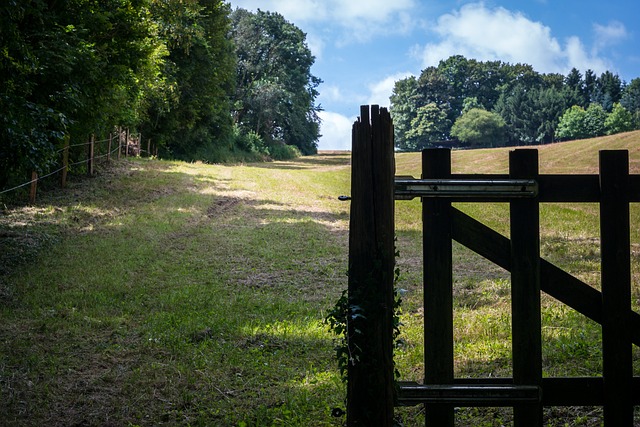
Wooden fences lend character and privacy to any property while enduring the elements. To maintain their appeal and longevity, understanding the type of wood and selecting the appropriate stain is paramount. This article delves into the essentials of fence staining and sealing, guiding you through the preparation process, application techniques, and the benefits of proper maintenance to ensure your wooden barrier remains a robust and aesthetically pleasing fixture for years to come. From cedar’s natural resistance to rot to oak’s strength, we explore how different wood types interact with various stains and sealants, ensuring you choose the best combination for your fence’s longevity and appearance.
- Understanding Wood Types and Stain Compatibility
- Preparing Your Wooden Fence for Staining
- Step-by-Step Guide to Effective Fence Staining
- Sealing Your Fence for Durability and Longevity
- Maintaining Your Stained and Sealed Fence over Time
Understanding Wood Types and Stain Compatibility
When considering the maintenance of a wooden fence, understanding the type of wood used is paramount. Different species of wood possess distinct characteristics that influence their absorbency and susceptibility to weathering. For instance, softwoods like cedar and pine generally have natural oils that provide some level of protection against moisture. In contrast, hardwoods such as oak and mahogany are denser and may require more penetrating stains to achieve even coverage. The choice of stain also plays a critical role in the longevity and appearance of the fence. Stain compatibility is determined by the wood’s porosity and the stain’s formulation, with water-based stains typically suited for less porous woods, while oil-based stains tend to work better on more absorbent species. It’s essential to select a stain that complements the wood type, ensuring that it penetrates properly without causing unnecessary damage or leaving an unsightly finish. Additionally, the climate and environment where the fence is located should be considered, as different conditions necessitate various stain types for optimal protection and longevity. Regularly maintaining your wooden fence through appropriate staining and sealing not only enhances its aesthetic appeal but also protects it from environmental stressors, thus safeguarding its integrity over time.
Preparing Your Wooden Fence for Staining
Prior to staining your wooden fence, it is crucial to prepare the surface for optimal stain penetration and adhesion. Begin by inspecting the entire fence for any necessary repairs, addressing splits, cracks, or loose boards promptly to ensure a smooth finish. Once the structure is sound, clean the fence thoroughly using a mild detergent solution or a wood-cleaning product specifically designed for this purpose. This will remove accumulated dirt, algae, and other contaminants that can prevent the stain from bonding properly with the wood. After cleaning, allow the fence to dry completely to avoid trap moisture beneath the stain, which could lead to an uneven or poorly adhered finish.
Once the wood is clean and dry, gently sand the surface with fine-grit sandpaper to remove any splinters, smooth over rough patches, and create a uniformly porous surface for the stain to penetrate. Be sure to wipe down the entire fence after sanding to eliminate all sanding dust; residual debris can interfere with stain application and mar the final appearance. With the preparation steps complete, your wooden fence is now ready for staining, ensuring a durable, long-lasting finish that enhances both the aesthetics and protection of your fence.
Step-by-Step Guide to Effective Fence Staining
To ensure your wooden fence withstands environmental elements and maintains its appearance, a regular staining and sealing routine is essential. Begin by thoroughly cleaning the fence to remove dirt, mildew, and any other debris that could impede the absorption of the stain. Use a pressure washer or a soft brush and a cleaning solution for this purpose. Once clean and dry, select a quality stain that suits the wood type and your desired protection level.
Before starting, protect nearby plants, shrubs, or lawn areas with drop cloths or tarps to prevent stain damage. Apply a high-quality, oil-based wood stain using a brush, roller, or sprayer, ensuring even coverage. Work in sections, starting at the top and moving downward to avoid overlapping or double-coating areas. Allow the first coat to dry completely according to the product’s instructions before applying a second coat for enhanced protection and longevity. The final step is to seal the fence with a clear sealer to provide an additional layer of defense against moisture and UV rays, which can fade and warp the wood over time. This multi-step process will not only rejuvenate the look of your wooden fence but also extend its lifespan, ensuring it remains a sturdy and attractive feature of your property for years to come.
Sealing Your Fence for Durability and Longevity
annually or as needed to protect against environmental factors such as sunlight, rain, and wind. This maintenance step extends the lifespan of the wood by preventing moisture from seeping in, which can lead to warping, splitting, and decay. Sealing also acts as a barrier against pests that might otherwise compromise the structural integrity of the fence. When selecting a sealant, opt for those specifically designed for wood fences, as they are formulated to penetrate the wood more effectively than generic sealing products. Applying a coat of sealant can be a DIY task; however, for best results and to ensure even coverage, consider hiring professionals who have the expertise and equipment to apply the sealant with precision. Regularly maintaining your fence with a sealant not only enhances its durability but also ensures it maintains an attractive appearance year-round, safeguarding your investment in property boundary demarcation for years to come.
Maintaining Your Stained and Sealed Fence over Time
Maintaining a stained and sealed wooden fence involves regular inspection and timely upkeep to ensure its longevity and appearance. After the initial application of stain and sealant, it’s advisable to perform an annual inspection during the spring or early summer. This allows you to identify and address any potential issues before winter weather can exacerbate them. During the inspection, look for signs of wear, such as peeling, cracking, or discoloration on the wood. These signs indicate areas where the protective layers may be compromised and are prone to moisture ingress, which can lead to decay and insect infestations.
When it comes time to reapply stain and sealant, thoroughly clean the fence first to remove any dirt, algae, or debris that could interfere with adhesion. Use a soft-bristled brush, a pressure washer set on a low-pressure setting, or a commercial wood cleaner to ensure a clean surface. After cleaning, allow the fence to dry completely before applying a new coat of stain or sealant. Apply the product evenly and according to the manufacturer’s instructions, paying special attention to areas that receive the most exposure to the elements. This will not only refresh the appearance of your fence but also reinforce its protective layers, extending its lifespan and maintaining its structural integrity over time. Regular maintenance ensures that your wooden fence remains a durable and attractive boundary feature for years to come.